


Oct 24,2026●By: GeoMaster HDD Drill Rods &Pipes
Horizontal Directional Drilling (HDD) is a demanding trenchless technology that installs underground utilities with minimal surface disruption. At the heart of this operation is the HDD rod, which transmits torque, thrust, and drilling fluid to the drill bit while withstanding relentless cyclic bending, tension, and compression. The longevity and reliability of the drill string depend directly on the rod’s quality and durability. A substandard rod failure can lead to costly downhole tool loss, project delays, and safety hazards. Manufacturing a high-performance HDD rod requires an uncompromising approach—meticulously selecting material, refining fabrication processes, and enforcing strict quality control. This article explores these key angles, highlighting the specific methods that dramatically increase rod durability.
Material Selection: The Foundation of Strength and Fatigue Resistance
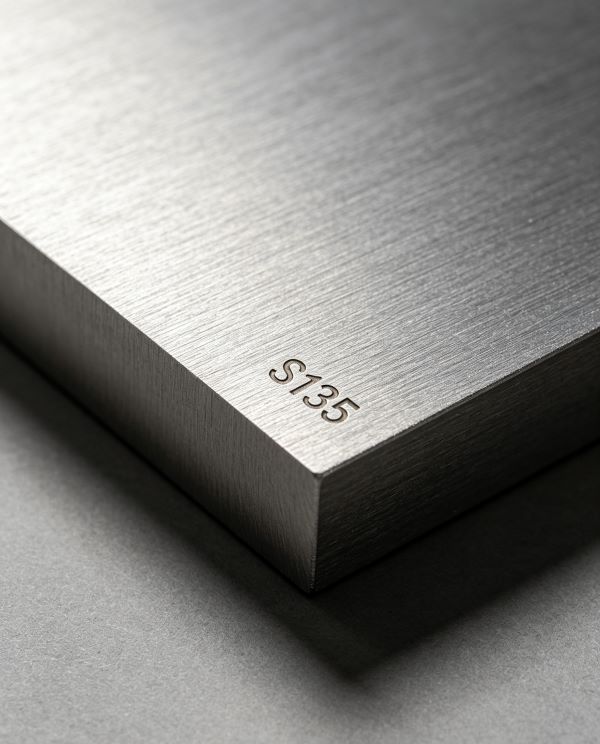
Durability begins with the raw material. Premium HDD rods are made from high-hardenability, low-alloy steel grades that offer an outstanding balance of strength, toughness, and fatigue resistance. The most commonly specified material is a modified AISI 4145H or 4330V chromium-molybdenum alloy steel. These grades are selected for their deep hardenability, ensuring a uniform martensitic microstructure through the entire tube wall after heat treatment.Our product uses S135 steel. Compared with common alloy steels such as 4145H and 4330V, S135 steel offers superior overall mechanical properties:
Higher strength: The yield strength of S135 is significantly better than that of 4145H, making it suitable for higher-pressure operating environments.
Superior toughness: Compared with 4330V, S135 shows more stable performance in low-temperature impact tests and has stronger resistance to brittle fracture.
Better cost-effectiveness: Under equivalent performance conditions, S135 offers a higher performance-to-price ratio, helping to reduce the overall cost.
To maximize life, all steel we select is produced via clean steel technology—vacuum degassed and refined to minimize non-metallic inclusions. Inclusions act as stress concentrators that initiate microcracks under cyclic loads. By specifying stringent cleanliness standards manufacturers can significantly improve the rod’s fatigue endurance limit. Furthermore, controlled sulfur content combined with calcium treatment promotes favorable inclusion morphology, reducing anisotropy and improving transverse toughness—essential for the rod body that experiences multi-axial stress during steering.
Manufacturing Processes: Precision Forging, Heat Treatment, and Joining
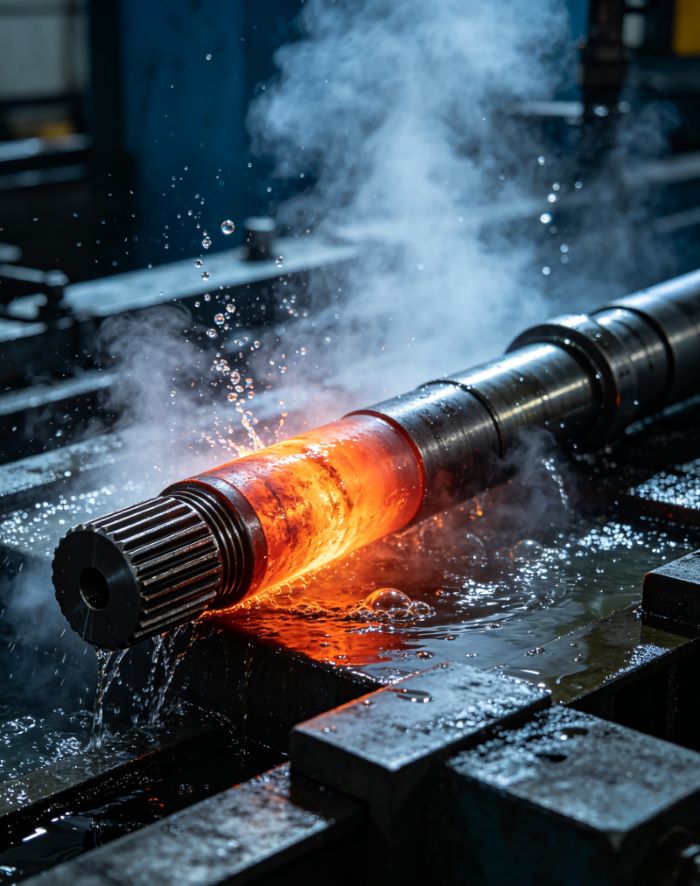
After seamless tube production by hot rotary piercing and pilger rolling, the tube undergoes a fully automated, precisely controlled quench and temper heat treatment. This is arguably the most critical step for durability. The rod is heated uniformly in a walking-beam furnace, held above the austenitizing temperature, and rapidly quenched in a polymer or water spray to achieve full martensite. This fine, tempered martensitic structure resists fatigue crack propagation and environmental embrittlement.
To create a one-piece, high-integrity assembly, the tool joints (ends) are joined to the upset tube ends using high-quality inertia friction welding. This solid-state process creates a 100% bond without filler metal, producing a fine-grain heat-affected zone that retains excellent mechanical properties via post-weld heat treatment and precision machining are correctly applied. After welding, the flash is removed, and the weld zone is locally normalized and tempered to refine the grain structure and relieve residual stresses—a crucial step to prevent low-cycle fatigue failures at the joint.
Thread machining represents another durability-defining operation.Our HDD rods use proprietary double-shoulder or multi-start thread designs to provide a larger torque capacity and more uniform stress distribution. The threads are precision-cut using CNC lathes with tight tolerances, but the true enhancement comes from cold rolling the thread roots. Rolling introduces compressive residual stresses on the surface, dramatically improving fatigue resistance at the thread—historically the most failure-prone zone.
Quality Control: Zero-Defect Assurance
Robust durability cannot exist without rigorous quality control. The entire manufacturing chain is safeguarded by non-destructive testing (NDT). Full-body ultrasonic inspection (UT) using phased array technology detects internal laminations and wall thickness variations down to 0.5 mm. After threading, each connection undergoes fluorescent magnetic particle inspection (MPI) to reveal any surface-breaking defects. Dimensional inspection with coordinate measuring machines (CMM) verifies thread form, pitch diameter, and seal surface geometry within micron-level tolerances, ensuring proper stress-free make-up in the field.
Crucially, batch samples are destructively tested for tensile strength, yield strength, elongation, and hardness mapping. More advanced quality programs also include resonant bending fatigue tests on full-scale rod samples. A high-quality rod should comfortably exceed 1 million cycles at a given stress level without failure. Documented traceability from heat number to final product ensures every rod can be audited throughout its lifecycle.
Key Methods to Maximize Durability
While all the above steps contribute to a reliable product, certain targeted methods create a step-change in HDD rod service life:
Deep Surface Compressive Stress Engineering: Beyond thread rolling, multi-step shot peening is applied to the inner and outer surfaces of the entire rod body, especially on the transition zones at the upset. This induces a compressive layer that counteracts tensile stresses from bending operation, effectively delaying fatigue crack initiation. For extremely demanding rock drilling, high-frequency impact treatment can further elevate surface hardness and compressive depth.
Optimized Hardbanding and Anti-Wear Protection: The outer diameter of the tool joint is often protected with a carbide-based hardbanding alloy applied by arc or laser cladding. The key to durability is using a crack-free, iron-based alloy with fine carbide dispersion that protects the joint from abrasive formation wear without damaging the steel casing. Internal coating with an epoxy or phosphate-based layer minimizes corrosion fatigue from drilling fluid, especially in harsher soil chemistries.
Stress-Relief Geometry and Workmanship: Finite element analysis (FEA) is employed to design generous transition radii at the weld neck and thread run-out. By eliminating sharp corners, the stress concentration factor is reduced, preventing the rod from breaking at these geometric stress risers. Additionally, strict control over heat treatment distortion and subsequent straightening procedures (with additional thermal stress relief) ensures the rod body remains straight within 3 mm over its entire length, minimizing operational whip and cycling amplitude.
Fatigue-Resilient Microstructure Management: Incorporating micro-alloying elements such as vanadium and niobium forms fine precipitates during tempering that resist dislocation movement and refine grain size. A grain size of ASTM A182 or finer is pursued, as it directly correlates to higher fracture toughness and slower fatigue crack growth rates.
Manufacturing a high-performance, highly durable HDD rod is a synergy of material science, precision engineering, and disciplined quality management. By starting with vacuum-degassed clean steel, applying a controlled quench-and-temper sequence, leveraging friction welding and cold-rolled roots, and reinforcing the assembly with compressive stress engineering and optimized wear protection, we can produce rods that withstand the punishing reality of directional drilling. The most impactful methods for boosting durability lie in managing residual stress, refining grain structure, and removing any micro-scale defect that could serve as a fatigue nucleation point. In an industry where downtime is measured in dollars and reputations, these manufacturing rigor directly translates to unparalleled field reliability. Therefore, our products possess excellent durability, perfect quality, and outstanding cost effectiveness.Choosing our products is your best decision.
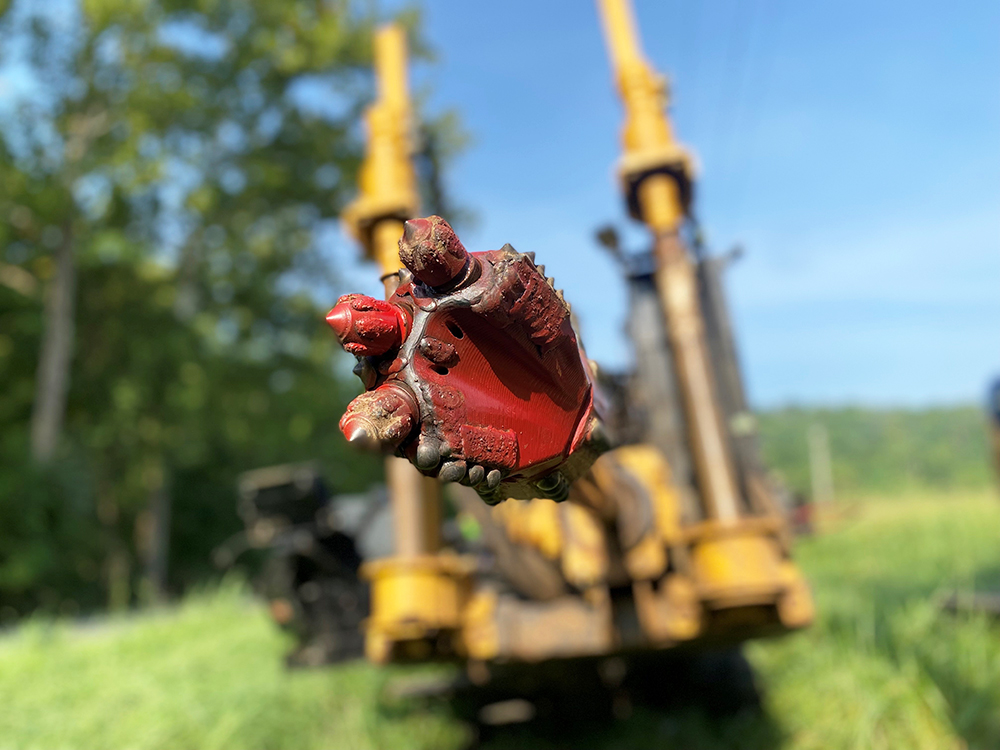
The Eagle Claw is a tri-cutter hard ground drill bit manufactured by Melfred Borzall, designed specifically for Horizontal Directional Drilling (HDD).First intr...
Aug 04,2026/Industry news
For horizontal directional drilling (HDD) contractors, drill rods are a major capital expense. Premature failure caused by improper use or neglect leads to freq...
Jun 03,2026/Company News
Only an excellent team can build an excellent product. Few stories illustrate this truth more vividly than the San Antonio Spurs’ development of Victor Wembanya...
May 20,2026/Company News
Global High-quality Drill Pipe Solution Service Provider
+86-195-8045-6679
Jiaye Financial Center, Taihu Street, Economic Development Zone, Wuxi City, China

 English
 Russian
 French
 Spanish
 Portuguese
 German